Jev, explained: the AI model that answers instead of writing
TypeSafe's new model does not write text. It answers typed questions with a confidence score, in milliseconds, for a fraction of LLM prices. Here is what that means for builders.


If you build software and have been stuffing an LLM into a loop to classify tickets, moderate comments or check a form, this launch is for you. In ten minutes you will know what TypeSafe's Jev does, what it refuses to do, and whether it fits the boring decisions in your product.
Source: TypeSafe launch video, September 2026.
The news in one paragraph
On 15 September 2026, TypeSafe AI, a lab founded by former OpenAI researcher Diogo Almeida, published its first model, called Jev. TypeSafe calls it a "System One Model". Unlike a chat model, Jev does not generate text at all. You send it some text plus a list of typed questions, and it returns a typed answer for each question together with a probability of how sure it is. TypeSafe claims Jev is 40 to 200 times faster than frontier LLMs on these tasks and costs $0.042 per million input tokens, with output free. It is in early access with a waitlist and a browser playground.
What "does not generate text" actually means
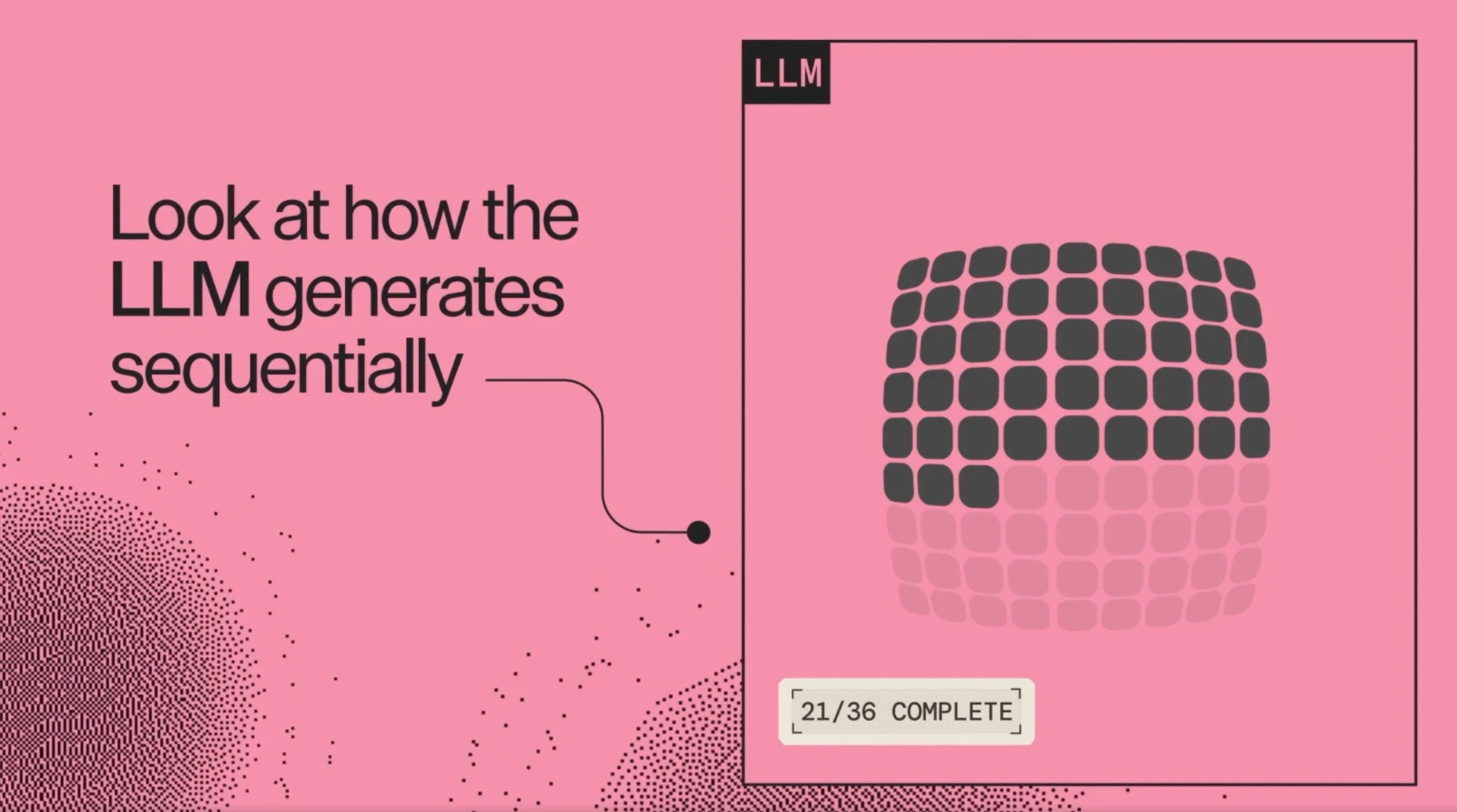
An LLM writes one token at a time, left to right, and you parse the result afterwards. That is why a classification request to a chat model takes seconds and sometimes comes back as a sentence when you asked for JSON.
Source: TypeSafe launch video.
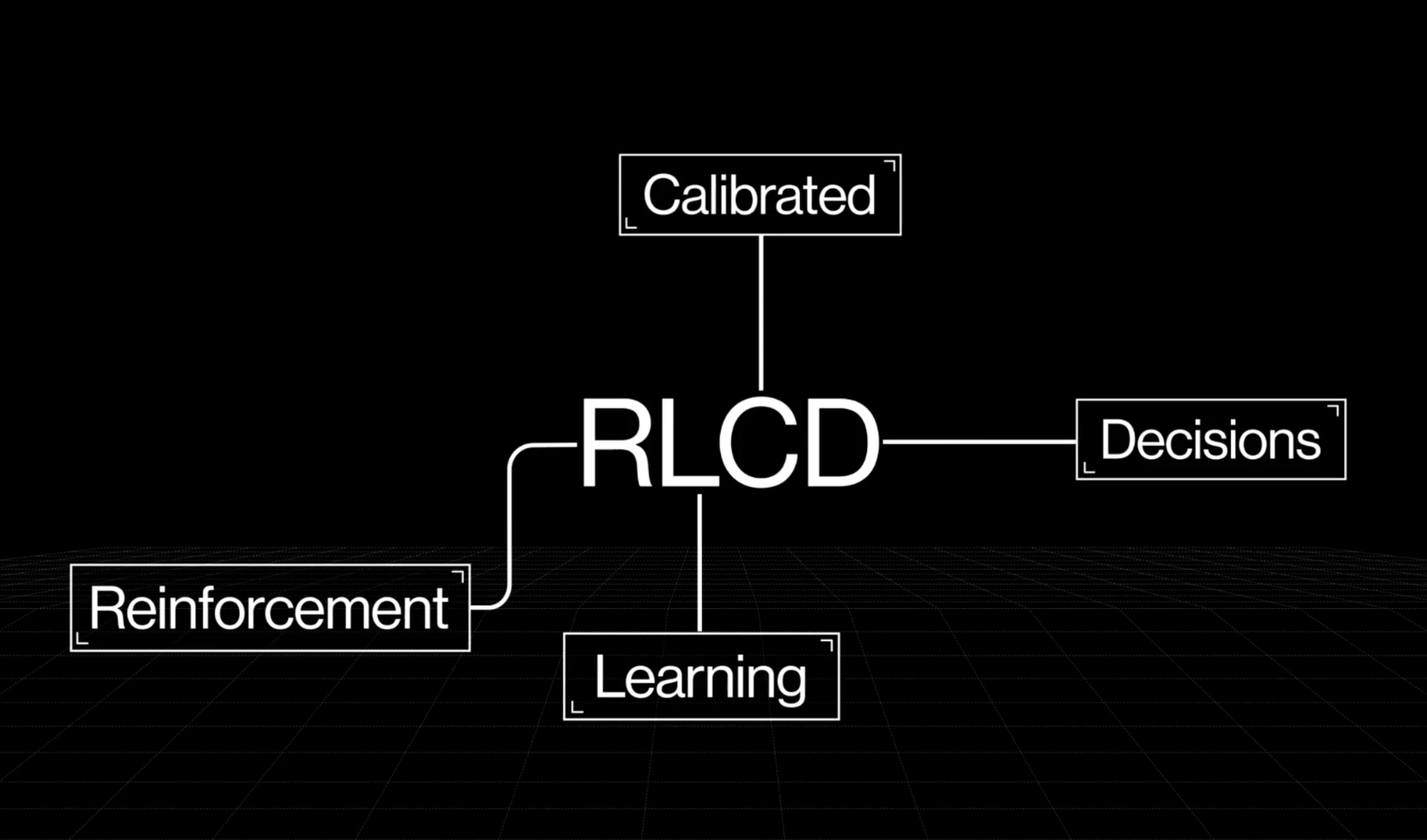
Jev skips writing. You define the shape of every answer in advance, and the model evaluates all the questions in parallel in a single pass. TypeSafe says this is a new architecture and sampler, trained with a method it names Reinforcement Learning for Calibrated Decisions, or RLCD. The word "calibrated" is the important one: the goal is that when Jev says 0.8, it is right about 80 percent of the time.
Source: TypeSafe launch video.
There are three kinds of question you can ask:
Noul: a yes-or-no question. You get a number between 0 and 1.
Choice: pick one option from a list you supply. You get the pick, the probability of every option, and a confidence.
Score: rate something on an ordered scale you define. You get the score and a confidence.
How a call looks
Here is the shape of a request, taken from the independent guide at whatisjev.com. It has not been run for this article because Jev is behind a waitlist as of 20 September 2026.
// untested: requires an early-access API key. Endpoint per whatisjev.com/getting-started, 2026-09-18.
POST https://api.typesafe.ai/v1/systemone
Authorization: Bearer <your-api-key>

{
  "model": "jev-latest",
  "state": "Please call me tomorrow morning to discuss the setup.",
  "questions": {
    "callback_requested": {
      "type": "noul",
      "instructions": "Does the sender explicitly ask for a phone call?"
    }
  }
}
The state is the text you want judged. Each entry in questions is one decision. You can send many questions about the same state in one request. The response gives one typed result per question.
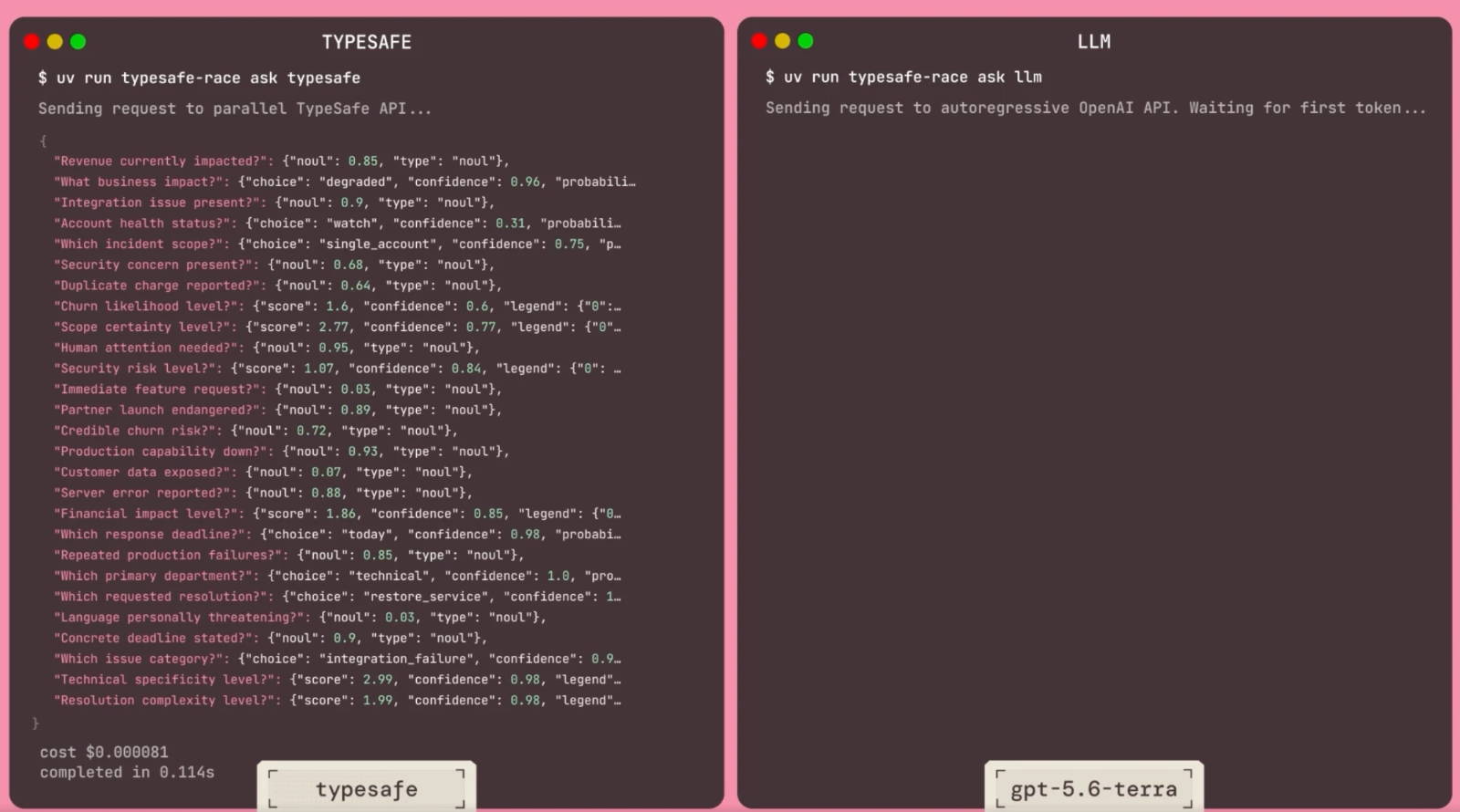
TypeSafe's launch demo makes the difference visible. Both sides receive the same support ticket and the same 27 questions. Jev returns everything before the LLM has produced its first token.
Source: TypeSafe launch video. The LLM side is labelled gpt-5.6-terra.
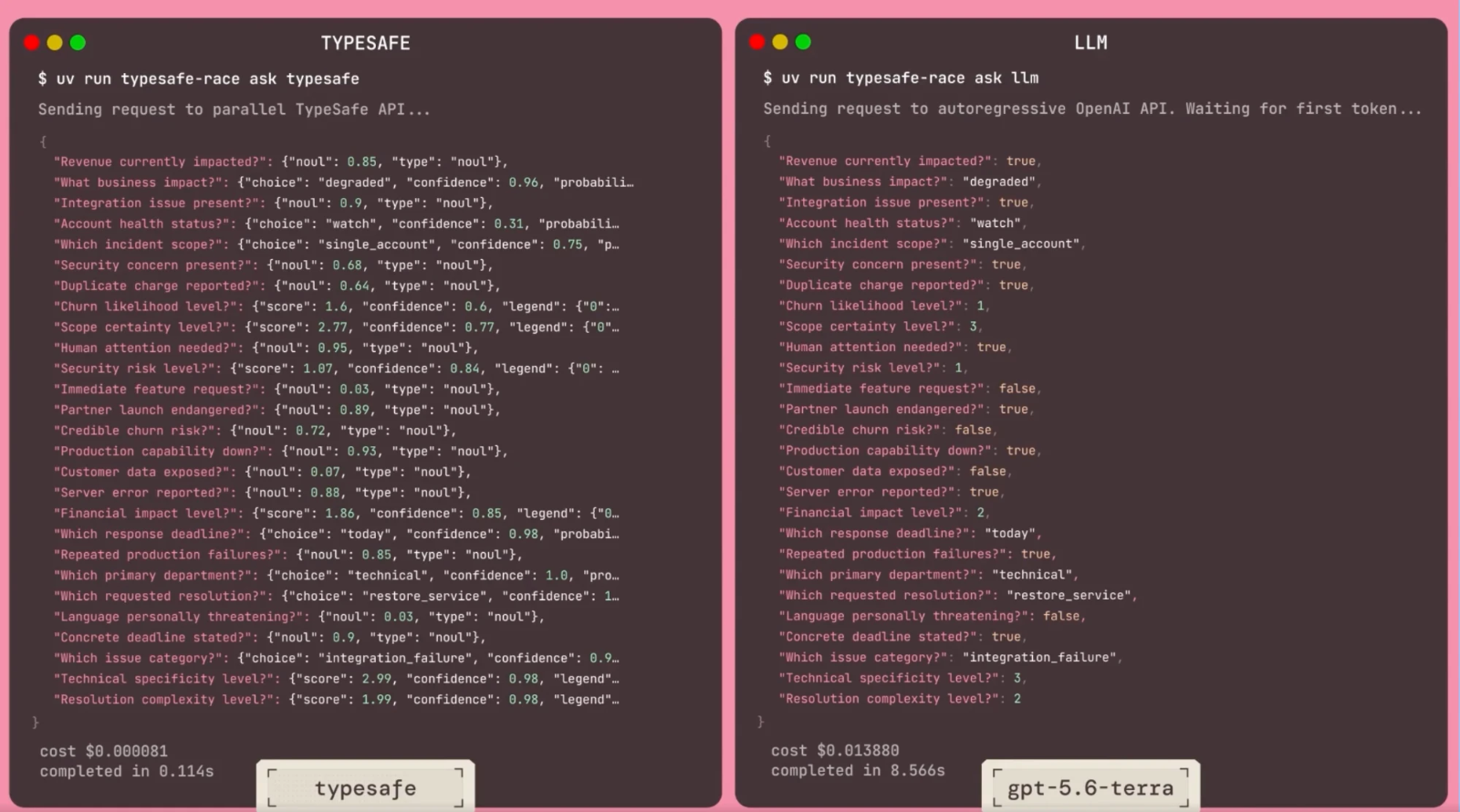
Source: TypeSafe launch video. These are TypeSafe's own measurements, not ours.
Notice what is in Jev's column that is missing from the LLM's: every answer carries a confidence. The LLM says true. Jev says 0.85.
Why the confidence number matters
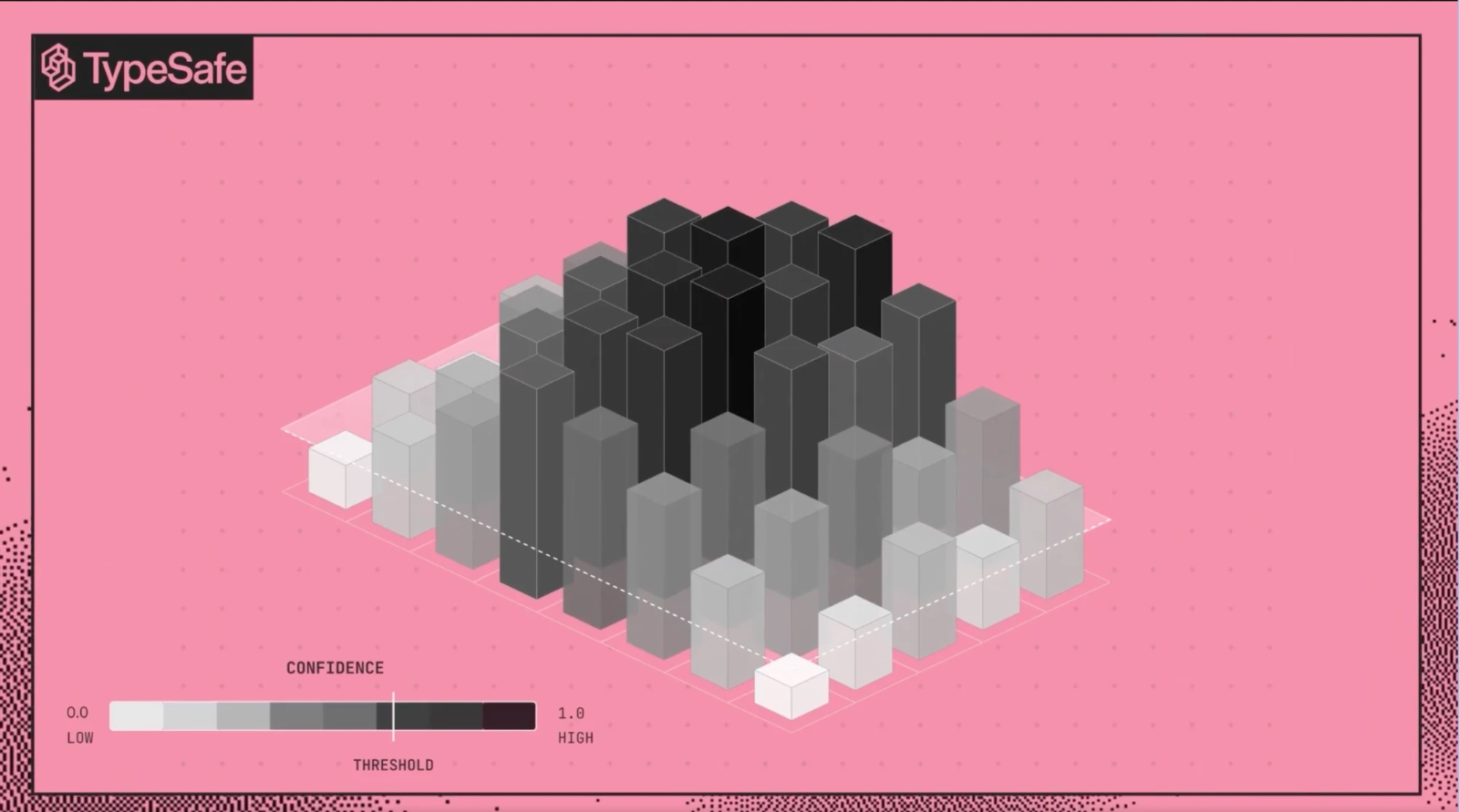
This is the part that changes how you write code. With a plain LLM answer, you either trust it or you do not. With a probability, you can set a threshold. Above 0.9, act automatically. Below 0.6, send it to a human. In between, ask a second question.
Source: TypeSafe launch video.
TypeSafe's pitch is that this lets "software act when confidence is high and escalate when it is not". For a small team, that is the difference between an automation you can leave running and one you have to babysit.
Speed and price, as claimed
TypeSafe reports end-to-end latency of 70 to 500 milliseconds, against 3 to 329 seconds for the frontier LLMs it compared with. Its headline is "100x faster".

Source: TypeSafe launch video.
On price, the published rate is 42per billion in put tokens, which is 0.042 per million. Output tokens are free. TypeSafe compares this to 0.20to10 per million input tokens for LLMs.
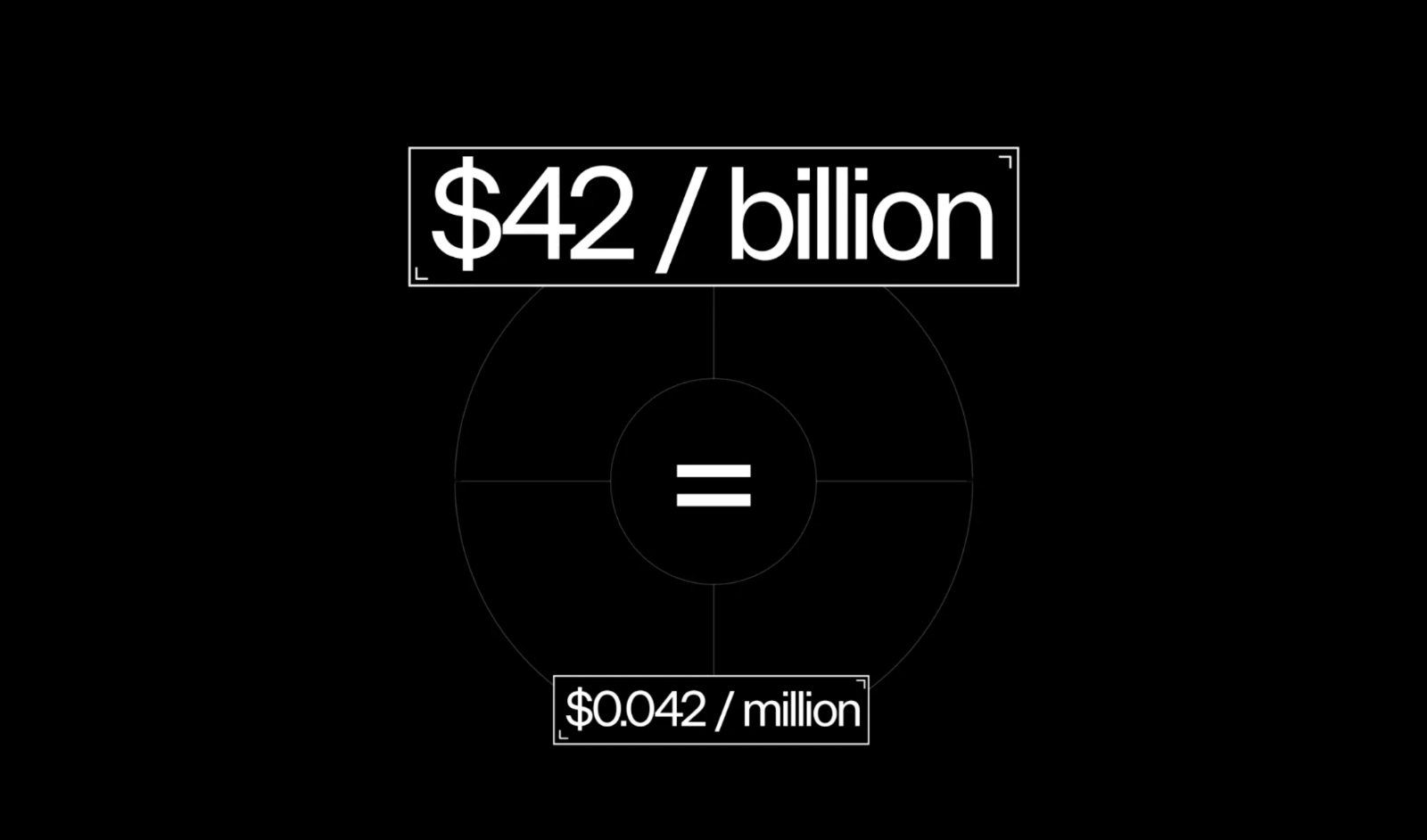
Source: TypeSafe launch video. Rate confirmed on docs.typesafe.ai/models via whatisjev.com, checked 2026-09-17.
TypeSafe also published a chart placing Jev at roughly the same "intelligence" as current frontier models on its own test set, at a cost per workflow around two orders of magnitude lower.
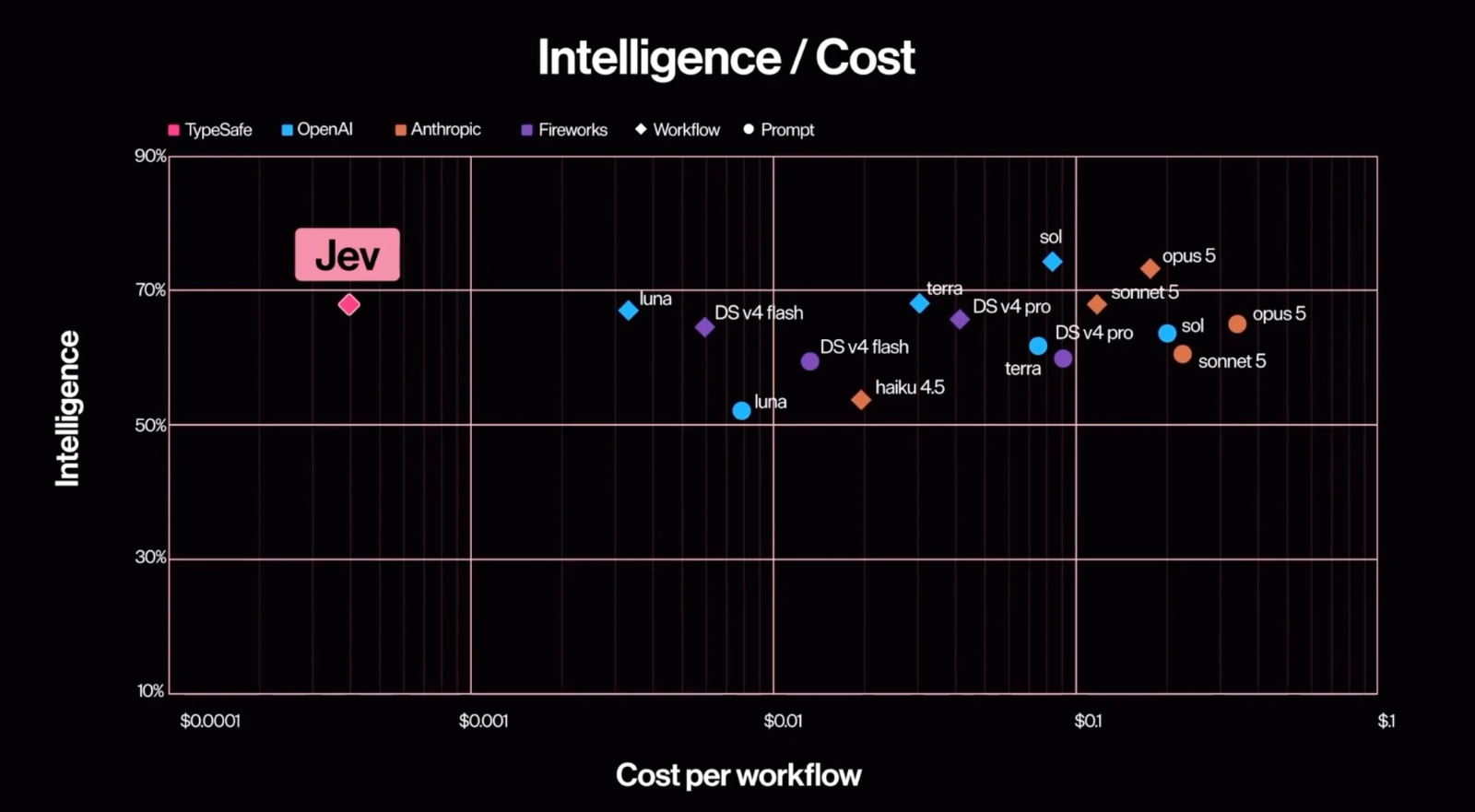
Source: TypeSafe launch video. Vendor benchmark; the task set and scoring method were not published with the chart.
All of these numbers come from TypeSafe. No independent benchmark existed when this article was written. Treat them as a claim to test, not a fact.
Pros
Typed output by construction. The answer is always one of the shapes you defined. No JSON repair, no retries because the model added a sentence.
A confidence you can build on. Thresholds replace guesswork about whether to trust the model.
Many decisions in one call. The demo answers 27 questions in one request, in parallel.
Cheap enough to run on everything. At the published rate, a million short checks cost a few dollars. That makes "classify every event" a realistic design.
Fast enough for the request path. Sub-second means you can gate a form submit or a chat message without a spinner.
Cons
It cannot write anything. No summaries, no replies, no code. If your flow ends in generated text, you still need an LLM for that step.
Text only, for now. TypeSafe says images are not supported yet.
You must know the questions in advance. Jev cannot discover a category you did not list. Choice questions support up to 255 options.
Early access. There is a waitlist, a
jev-latestalias that can change under you, and no published rate limits.All the numbers are the vendor's. Speed, cost and accuracy claims are unverified by third parties as of 20 September 2026.
Calibrated is not the same as correct. A well-calibrated 0.7 still means wrong three times in ten. The independent guide is blunt about this: output format does not equal decision accuracy.
Where a small team would actually use it
The pattern is the same everywhere: text comes in, a fixed decision has to be made, and the decision has to happen fast and often.
Support triage. Which department, how urgent, is revenue affected, is the tone threatening. This is TypeSafe's own demo.
Moderation. Is this comment spam, is it abusive, does it contain a link that should be held for review.
Form and listing checks. Does this product description make an absolute promise, is the tagline in English, does the pricing field match the description. A product board like ours has hundreds of these per day.
Routing in agents. Before an expensive LLM call, ask Jev whether the call is needed at all and which tool to use.
Quality gates on generated text. Let the LLM write, then let Jev score the result against your rubric before anything ships.
Analytics on unstructured data. Tag every feedback message with ten fixed labels, cheaply enough to do it for all of them.
What to do with this
If you have an LLM call in your product that ends in an if statement, that call is a candidate. Write down the questions it answers, join the waitlist, and test your own data in the playground before trusting any of the numbers above.
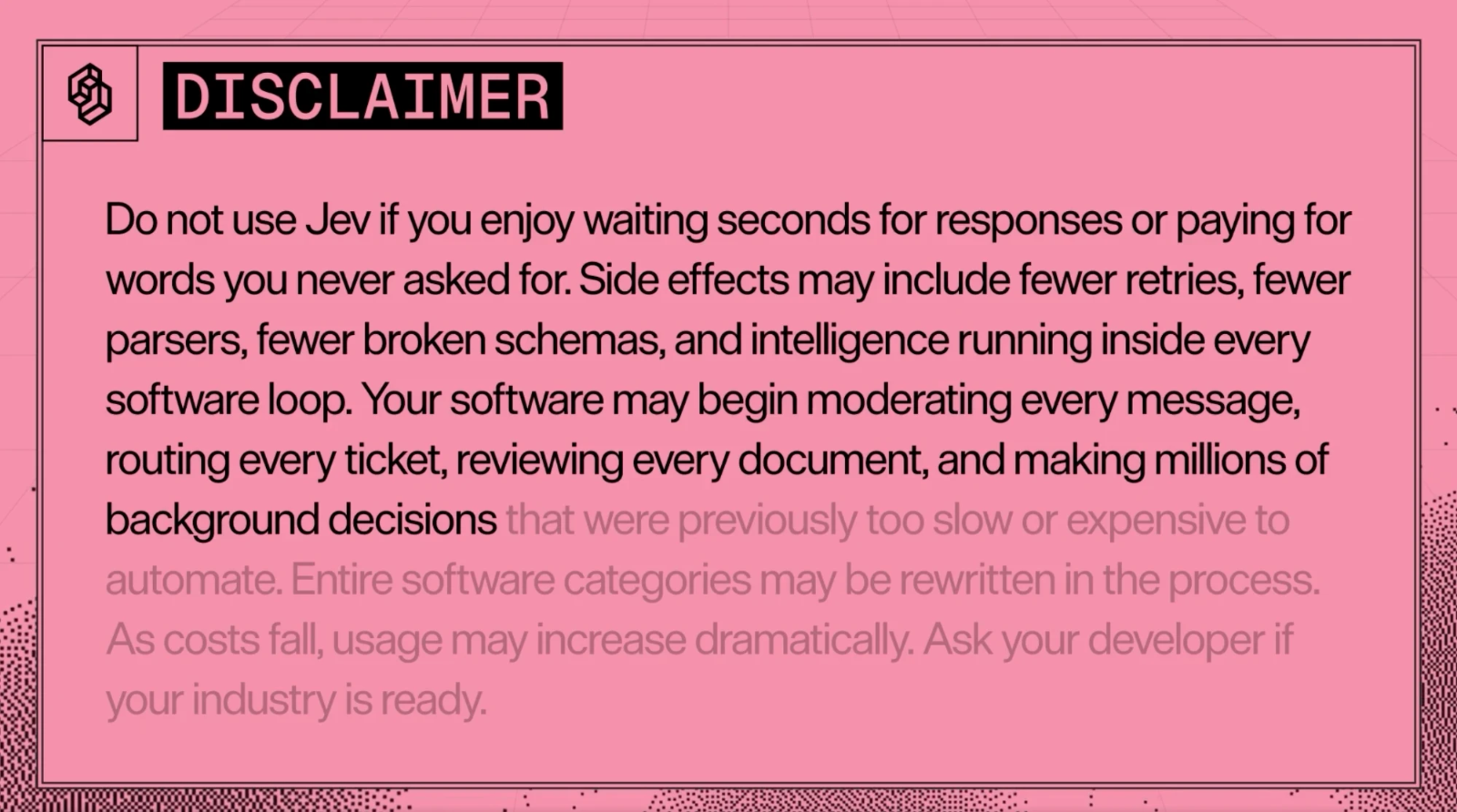
Source: TypeSafe launch video.
TypeSafe is not listed on AppBoard.pro yet. If you are building with Jev, or on top of it, submit your product and tag it so other makers can find it.
Sources: TypeSafe: Introducing System One Models and Jev (2026-09-15) · typesafe.ai · docs.typesafe.ai · What is Jev, independent guide and its getting started and pricing pages · MarkTechPost coverage (2026-09-19).
0 comments
Sign in to join the conversation.
Loading…