Why I built 3D gifts that open from a link
A solo maker from India on building 23 interactive gifts — 360° rooms, a pop-up wedding card with a real fire — that open from a WhatsApp link with no app.

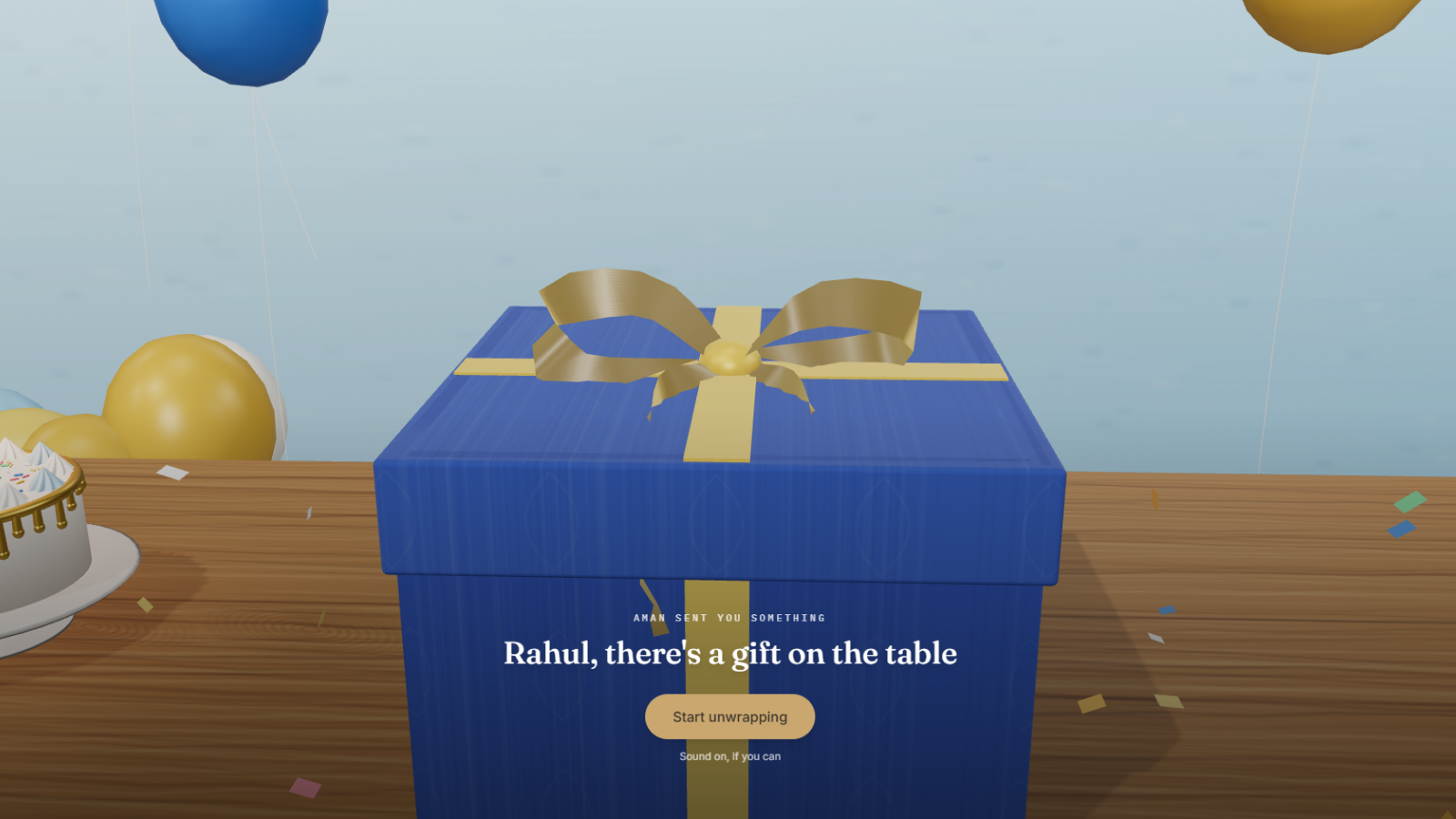
Every birthday, Diwali and Raksha Bandhan, my phone fills up with the same forwarded messages. A cake emoji, a GIF, “Happy Birthday bro.” By the next morning nobody remembers who sent what. I wanted to make something people would actually open.
RAYXIS Gifts is the result: interactive gifts that open from a link. You pick a design, add a name, a message and a few photos, and send one link on WhatsApp. The person taps it and it opens in their browser. There’s no app to install and nothing to sign up for on their side.
What you can send
There are 23 designs now, and 11 of them are free. A few of my favourites:
A 360° birthday room. You look around by moving your phone, with their name in neon and their age in gold balloons.
A New Year rooftop. A teddy’s rocket refuses to launch, he kicks it, and every firework in town goes off and writes their name in the sky.
A pop-up birthday card. The people in your photo are cut out right in the browser and stand up like paper when the card opens.
A pop-up Hindu wedding card, the newest. It has Ganpati on the cover. When guests open it, a havan kund rises inside and its fire lights up the invitation. Every function gets its own date, venue, Google Maps button and Add to calendar button, plus a live countdown to the wedding.
Building it
Every scene is written in code with three.js and React Three Fiber, and runs inside a Next.js site. I don’t use video files or heavy 3D models where I can avoid them. Most gifts are opened on a phone, often inside WhatsApp’s own browser, so speed matters more than anything.
A few things were harder than I expected:
Fire. My first version glowed beautifully on the dark maroon card. Then I added colour palettes, and on the ivory card the flames vanished completely, because adding light to a near-white wall just gives white. The fix was to draw a soft flame pixel by pixel and only make it glow on dark walls.
Language. Wedding cards in India are written in Hindi, Gujarati, Sanskrit and English. Many people can read Devanagari but can’t type it. So the form has ready-made traditional lines to tap, plus a small transliterator: type “shri ganeshaya namah” in English letters and it writes श्री गणेशाय नमः. It runs in the browser, so nothing typed is sent anywhere.
Time zones. Families abroad get the same invitation. The card prints the time as it is at the venue, while each guest’s countdown and calendar entry follow their own clock.
How it pays
Most designs are free. The premium 3D scenes use one-time credit packs, with no subscription and no expiry. In India you pay by UPI, and everywhere else by card.
What I’ve learned so far
People don’t search for “interactive gift.” They search for “birthday surprise link,” “wedding card matter in Hindi” and “Diwali wishes for colleagues.” Writing genuinely useful pages for those searches has brought more visitors than any launch post.
Festivals shape everything, too. I now plan each scene weeks before its festival, because the searches start long before the day.
What’s next
More festival scenes, a way for the person who receives a gift to send one back, and making the gifts easier to share as short videos.
If you send one, I’d love to hear which design you picked and what they said.
0 comments
Sign in to join the conversation.
Loading…